
Why Inclusion in Fitness Requires More Than Good Intentions
The fitness industry often promotes the idea that “fitness is for everyone.”
But for millions of people with disabilities, that statement is still not true in practice.
The problem is rarely a lack of motivation from the athlete. More often, it is a lack of education, access, and preparedness within the fitness industry itself.
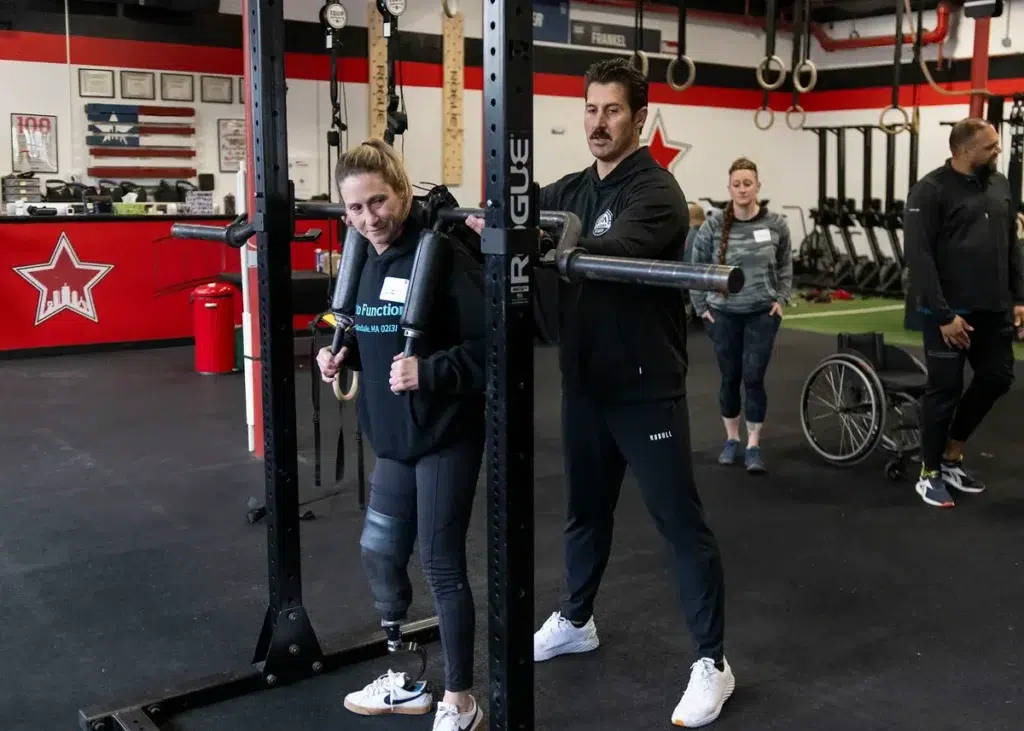
Many trainers want to help people with disabilities, but have never been taught how. They are unsure how to adapt movements, communicate appropriately, use adaptive equipment, or modify programming safely and effectively. As a result, people with disabilities are frequently excluded from traditional fitness environments—not because they cannot train, but because the system was never designed with them in mind.
The need for adaptive fitness trainers is not a niche issue. It is a global public health issue.
Disability Is More Common Than Most People Realize
According to the World Health Organization, more than 1.3 billion people worldwide live with a disability (approximately 16% of the global population)1. In the United States alone, the Centers for Disease Control and Prevention reports that 1 in 4 adults has a disability2.
Yet despite representing one of the world’s largest minority populations, people with disabilities remain significantly underserved in fitness, recreation, and health promotion systems.
Research3456 consistently shows that people with disabilities experience:
-
Higher rates of obesity
-
Increased risk of cardiovascular disease
-
Reduced access to preventative healthcare
-
Lower rates of physical activity participation
-
Greater levels of social isolation
The CDC reports that adults with disabilities are nearly twice as likely to be physically inactive compared to adults without disabilities7.
This creates a dangerous cycle:
👎 Reduced access to fitness leads to inactivity…
👉 Inactivity increases health complications…
👉 Health complications further reduce independence and quality of life
Adaptive fitness trainers can break that cycle.
The Fitness Industry Was Not Built for Disability
Most fitness certification systems spend little to no time teaching trainers how to work with people with disabilities.
As a result:
-
Trainers lack confidence coaching people with disabilities
-
Trainers don’t have proper communication skills and fear saying the wrong thing
-
Gym owners avoid marketing to disabled populations (becuase they aren’t able to serve that population or don’t have any current members with disabilities)
-
People with disabilities feel unwelcome or unsafe
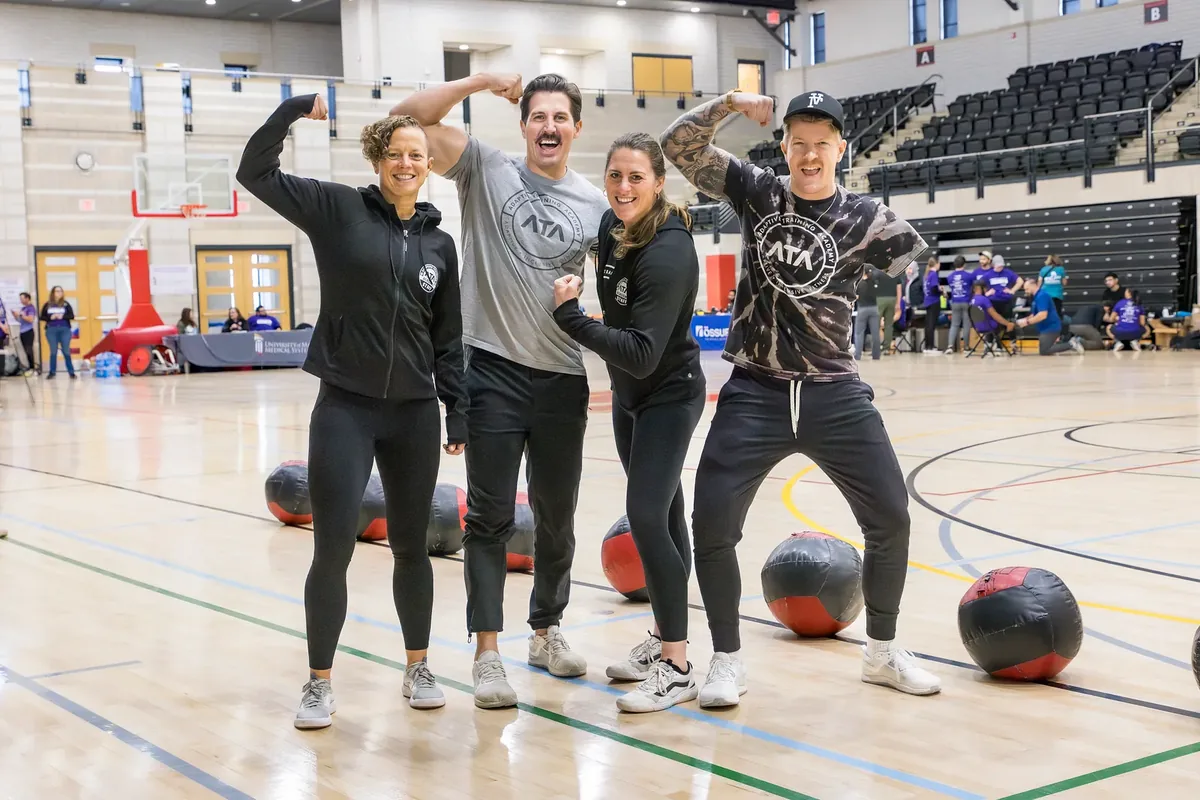
ATA emphasizes that many trainers report fear of offending trainees with disabilities and uncertainty about how to communicate effectively8. This educational gap creates an accessibility problem far larger than ramps or door widths.
A gym can technically meet legal accessibility standards while still being functionally inaccessible if the staff lacks the knowledge to coach disabled athletes safely and confidently.
Inclusion is not just ADA-compliant restrooms. Inclusion requires education and then action.
The Future of Fitness Must Include Disability
The fitness industry is slowly evolving toward inclusivity, but there is still a massive gap between intention and implementation.
People with disabilities should not have to “hope” they find a qualified trainer.
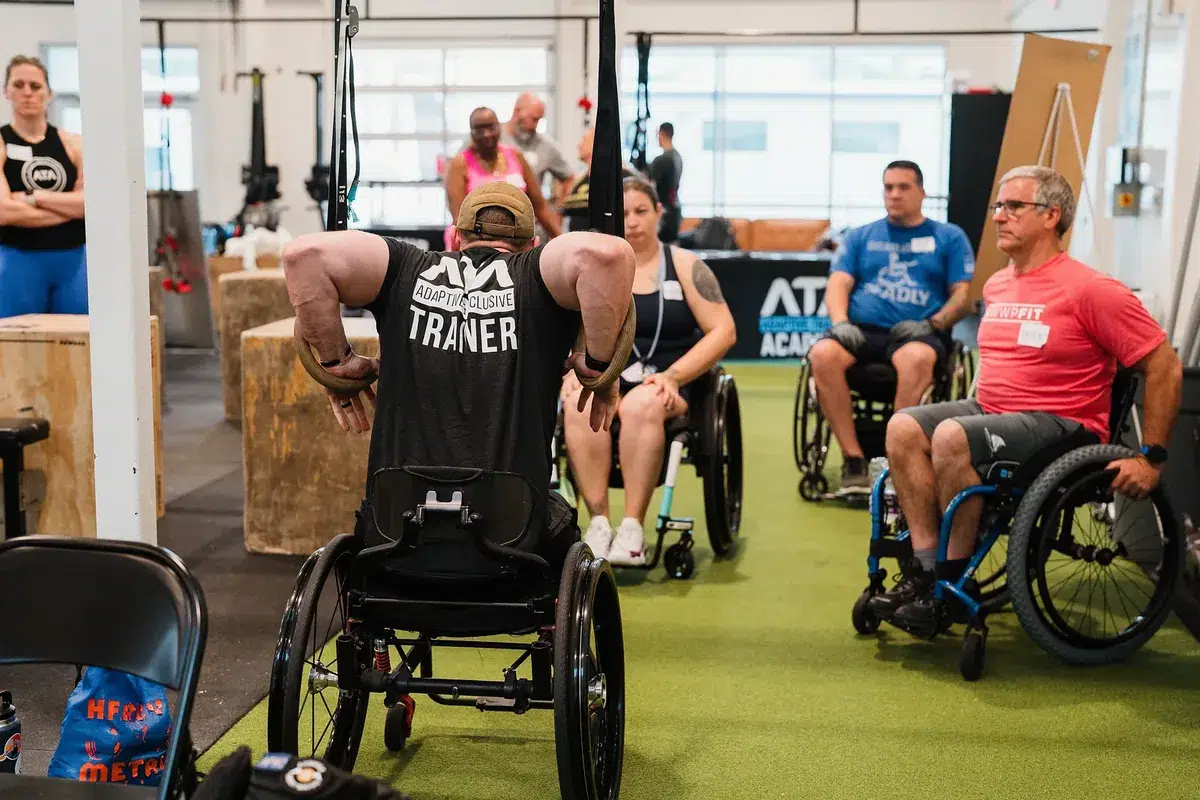
Accessible and inclusive fitness education should become a standard part of professional development for:
-
Personal trainers
-
Strength coaches
-
Therapists
-
Group fitness instructors
-
Gym owners
-
Recreation staff
-
Sport coaches
Because disability is not rare. And fitness is not optional.
If the mission of fitness is truly to improve health and quality of life, then the industry must stop treating adaptive training as a specialty for a small population and start recognizing it as an essential part of professional competency.
The question is no longer whether people with disabilities belong in fitness spaces.
The real question is whether the fitness industry is finally ready to learn how to coach them properly.
Notes
-
World Health Organization. Disability. World Health Organization. Published March 7, 2023. https://www.who.int/news-room/fact-sheets/detail/disability-and-health
-
Centers for Disease Control and Prevention (CDC). Disability Impacts All of Us. U.S. Department of Health & Human Services. https://www.cdc.gov/disability-and-health/articles-documents/disability-impacts-all.html
-
World Health Organization (WHO). Disability and Health Fact Sheet. Published March 7, 2023. https://www.who.int/news-room/fact-sheets/detail/disability-and-health
-
Centers for Disease Control and Prevention (CDC). Disability and Health Overview. U.S. Department of Health & Human Services. https://www.cdc.gov/disability-and-health/about/index.html
-
National Academies of Sciences, Engineering, and Medicine. Social Isolation and Loneliness in Older Adults: Opportunities for the Health Care System. Washington, DC: The National Academies Press; 2020. https://doi.org/10.17226/25663
-
Centers for Disease Control and Prevention (CDC). Disability and Health Data System (DHDS).
-
Centers for Disease Control and Prevention (CDC). Adults with Disabilities Are Less Likely to Be Physically Active Than Adults Without Disabilities. U.S. Department of Health & Human Services. Published May 14, 2024. https://www.cdc.gov/disability-and-health/features/adults-with-disabilities-and-physical-activity.html
-
Adaptive Training Academy. Adaptive and Inclusive Trainer Textbook v2.0. 2022