
Why The Care Shouldn’t End When Insurance Runs Out
One of the biggest gaps in healthcare and fitness today happens at the exact moment many people with disabilities (PwD) need support the most.
After a trauma or illness, people may spend weeks to months working with medical professionals and physical therapists to regain function. Then one day, the insurance-approved visits run out. And the system essentially says:
“Good luck.”
For many PwD, this transition feels abrupt, confusing, and isolating. They may technically “graduate” from physical therapy while still feeling physically unprepared for real-world life and long-term health training.
In many cases, they are still profoundly deconditioned. And most have absolutely no idea how to safely train their body moving forward.
I know this experience personally.
After recovering from injuries sustained during my time in the Navy, I eventually completed physical therapy and was discharged from formal care. My big accomplishment after using a wheelchair and not walking for months was navigating stairs safely on crutches. But despite technically “finishing rehab,” I still had no understanding of how to train with my new physical limitations. How would I squat, or deadlift, or really do anything now?
Nobody taught me:
-
how to adapt exercises,
-
how to structure training,
-
or how to train safely.
I was medically discharged from care…but not truly prepared for independent physical training. And that experience is incredibly common.
The Faulty System
In the United States, physical therapy is largely controlled by the insurance system. Access to care is often limited by referral requirements, authorization processes, reimbursement restrictions, and caps on the number of covered visits. In many cases, therapy is approved only until a patient reaches a certain level of “functional independence” or demonstrates enough improvement to justify discharge1.
But there is a major difference between being medically stable and being physically prepared for long-term health.
A person may complete rehabilitation while still lacking the knowledge needed to safely train with their new abilities. They may no longer qualify for insurance-covered therapy, yet still be far from physically thriving.
This creates a major gap in knowledge and support that ends on the criteria of the insurance system rather than the actual needs of the person.
The healthcare system is primarily designed to restore basic function and reduce immediate impairment. It is not structured to provide long-term fitness development, performance training, or continued wellness support after formal rehabilitation ends.
As a result, many PwD experience what feels like a “hard stop” in care. One day, they are working with trained professionals; the next, they are expected to navigate a traditional gym independently, which often feels inaccessible or ill-equipped to support them.
For many individuals, this transition becomes one of the most difficult parts of recovery. Not because they no longer need physical training, but because the system was never designed to bridge rehabilitation into lifelong fitness.
Physical Therapists to the Rescue!
For many reasons, Physical Therapists (PT) are uniquely positioned to help solve the transition from rehabilitation into lifelong physical training.
KNOWLEDGE
PTs already possess many of the hardest skills to teach adaptive fitness trainers. PTs typically possess far more formalized education in human movement than most fitness trainers. They understand and have passed a licensing exam proving their knowledge on anatomy and pathology, movement mechanics, recovery and rehabilitative methods, safety considerations, and individualized care.
TRUST
More importantly, they already work directly with people adapting to life after injury, illness, surgery, or disability. They also already have something incredibly valuable that many aspiring fitness businesses spend years trying to build: trust.
Patients often spend weeks or months developing strong therapeutic relationships with their physical therapists during some of the most vulnerable periods of their lives. PT clinics become places where people learn to move again, rebuild confidence, and regain independence. That level of trust creates a natural bridge into continued fitness and wellness services.
ACCESSIBLE FACILITY & EQUIPMENT
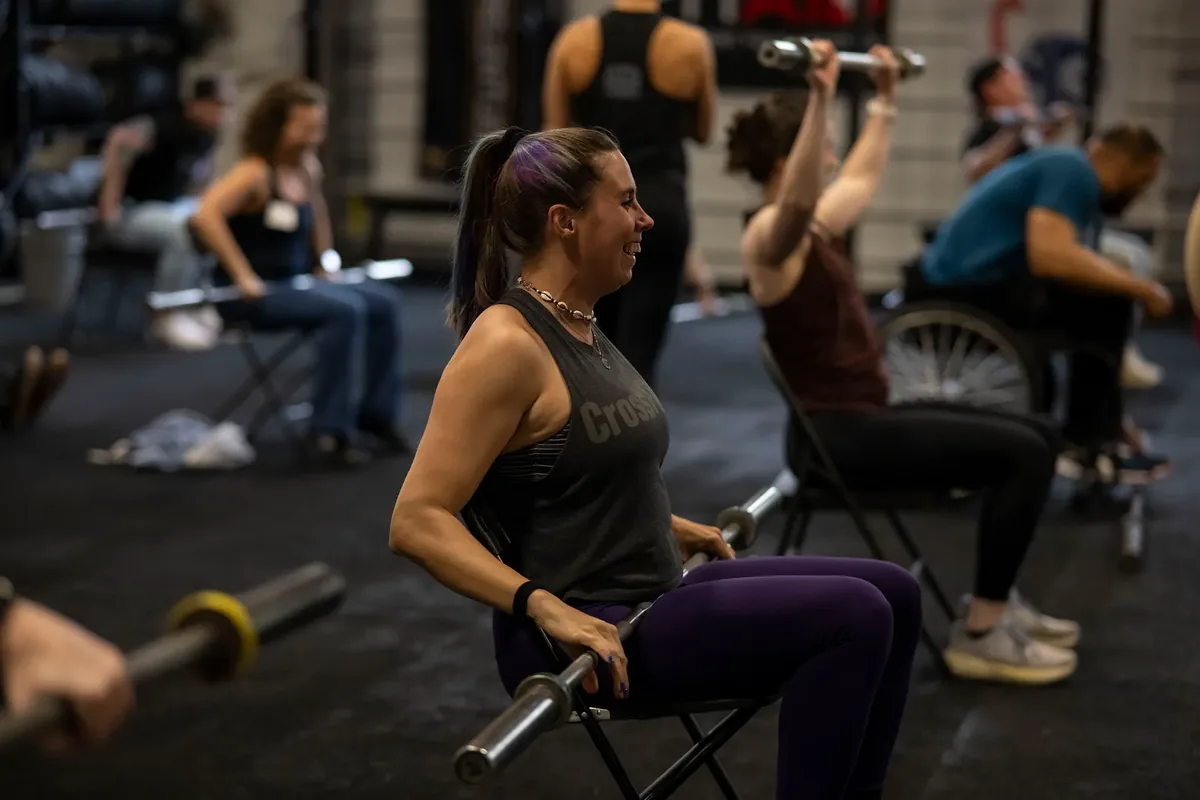
And in many cases, PT clinics already have much of the physical infrastructure needed to support adaptive fitness services. Rehabilitation clinics already contain the necessary fitness equipment, such as free weights, bands, cable machines, and cardio equipment. They also have specialized equipment typically not found in most gyms, such as balance supports, overhead support track systems, gait trainers, treatment tables, and a variety of safety devices. Many therapy facilities are functionally very similar to fitness studios; they simply operate under a medical model rather than a long-term wellness model.
The combination of knowledge, trust, and accessible training spaces creates a major opportunity to solve the transition gap.
Instead of discharging patients into uncertainty once insurance-covered therapy ends, clinics could begin offering structured pathways into ongoing adaptive fitness programs. Rather than ending the relationship when rehabilitation is “complete,” the clinic could evolve into a long-term support system focused on helping people continue to improve their health, fitness, and independence.
For many patients, this type of transition would feel far more natural than suddenly entering a traditional gym environment alone.
The need already exists. What is missing are enough systems designed to bridge rehabilitation into lifelong fitness.
The Business Opportunity for PT Clinics
From a business perspective, this creates a major opportunity for PT clinics to diversify revenue beyond insurance reimbursement.
Most clinics already have the core ingredients needed to build adaptive fitness services: educated movement professionals, trusted patient relationships, physical space, and training equipment. What many clinics do not realize is that they are already serving a population that continues needing physical training long after formal rehabilitation ends.
Every week, patients finish physical therapy still needing guidance with strength, endurance, mobility, confidence, and exercise adaptation. Yet once insurance-covered care ends, many are left trying to navigate traditional fitness spaces alone, or they stop training altogether.
That creates a major opportunity for clinics willing to bridge rehabilitation into long-term fitness. PT clinics can affect major changes in their patients’ lives and provide additional revenue from fitness services.
Instead of discharging patients completely, PT clinics could offer post-rehab adaptive fitness training. This creates continuity of care for patients while also generating recurring cash-based revenue streams independent of insurance limitations.
And unlike traditional fitness businesses competing for new members, PT clinics already have direct access to a population actively needing these services. The patient-to-trainee pipeline already exists. What’s missing is the bridge between rehabilitation and lifelong fitness.
The Future May Belong to Hybrid Rehab + Fitness Gyms
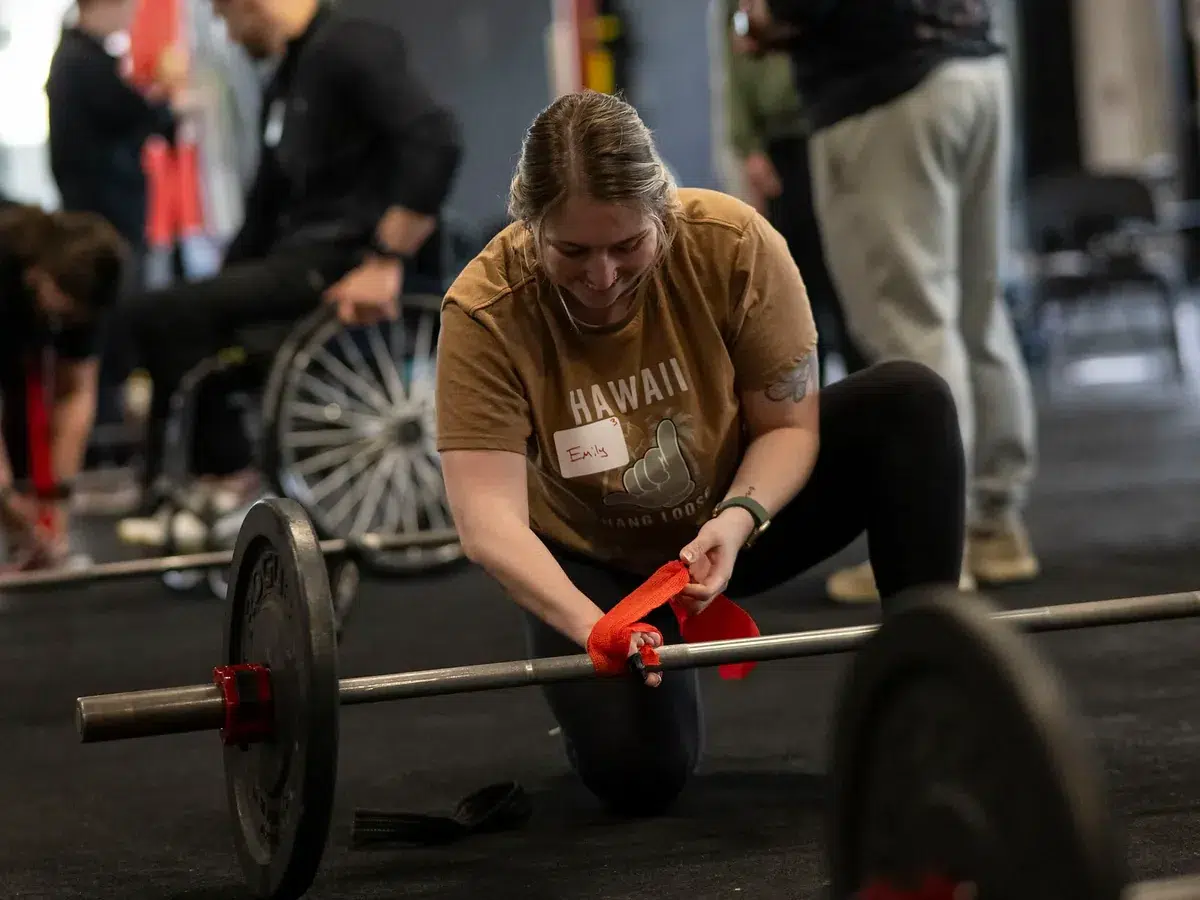
Some of the most innovative adaptive programs today are beginning to blur the traditional line between healthcare and fitness.
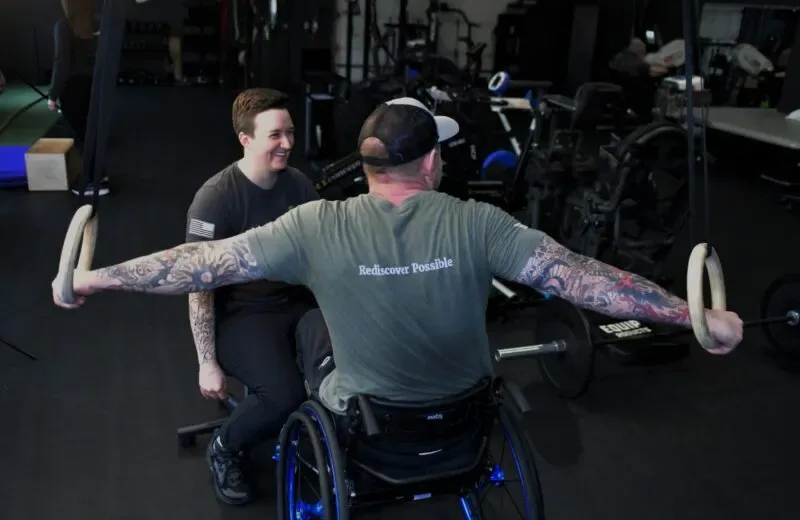
Instead of treating rehabilitation and long-term wellness as completely separate systems, these programs combine rehabilitation principles with strength and conditioning, fitness training, community support, and long-term health coaching. And in many ways, that model makes far more sense than the hard divide that currently exists between physical therapy and the fitness industry.
Because people recovering from injury, illness, or disability do not suddenly stop needing physical support once insurance coverage ends.
In fact, that transition period is often when guidance matters most.
A person may leave rehabilitation medically stable but still lack the strength, endurance, confidence, or movement knowledge needed to successfully return to independent fitness and daily life. Without continued support, many become sedentary again, lose progress, or struggle to maintain their health long term.
Some clinics are already recognizing this gap and building systems to solve it.
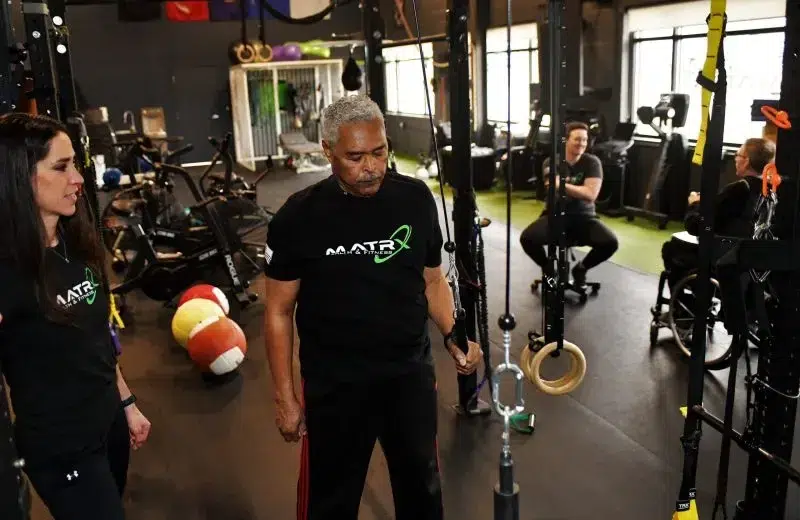
For example, Matrix Physical Therapy in Michigan has expanded beyond traditional rehabilitation services to offer adaptive fitness and strength programs that help people continue training after therapy ends. Their programs include adaptive fitness classes led by AIT-certified trainers, helping bridge the gap between rehabilitation and long-term fitness participation.
This type of model creates continuity instead of a hard stop. Rather than discharging people from care and expecting them to figure things out alone, clinics can provide a structured pathway into lifelong fitness, wellness, and community support.
The clinics, coaches, and organizations that recognize this gap early may help create an entirely new category of adaptive health and fitness services — one focused not just on recovery, but on lifelong physical independence and health.
From System Faults and Care Gaps to Action
Right now, too many PwD experience a “hard stop” between rehabilitation and lifelong fitness. They leave therapy medically discharged but still lacking the guidance, confidence, and support needed to continue improving their health independently.
Physical therapists are uniquely positioned to help solve this problem.
They already possess the movement knowledge, patient trust, and accessible facilities needed to create a bridge between rehabilitation and long-term fitness. By integrating adaptive fitness services into existing clinics, PTs have the opportunity to improve continuity of care, expand long-term patient outcomes, and create sustainable new revenue streams beyond insurance reimbursement.
The need already exists.
The patient population already exists.
The facilities and expertise often already exist.
What’s missing are more professionals willing to bridge the gap between rehabilitation and lifelong fitness. And the clinics that move first may help define the future of adaptive health, fitness, and recovery.
Notes
-
Centers for Medicare & Medicaid Services. (2019). Outpatient rehabilitation therapy services: Complying with documentation requirements. https://www.cms.gov/Outreach-and-Education/Medicare-Learning-Network MLN/MLNProducts/Downloads/OutptRehabTherapy-Booklet-MLN905365print-friendly.pdf